

Best Electric Bike for Seniors in 2026: Affordable, Comfortable & Safe Picks (Complete Guide)
Many older adults stop riding bikes because of sore knees, steep hills, or worry about getting tired far from home. Electric bikes remove most of those barriers. That is why more retirees, and the families who support them, are researching the best electric bikes for seniors.
An e-bike looks and rides like a regular bicycle, but a small motor helps you pedal. You still get exercise, just with a boost when you need it. The right model can help you run errands, visit friends, and enjoy the outdoors on your own terms.
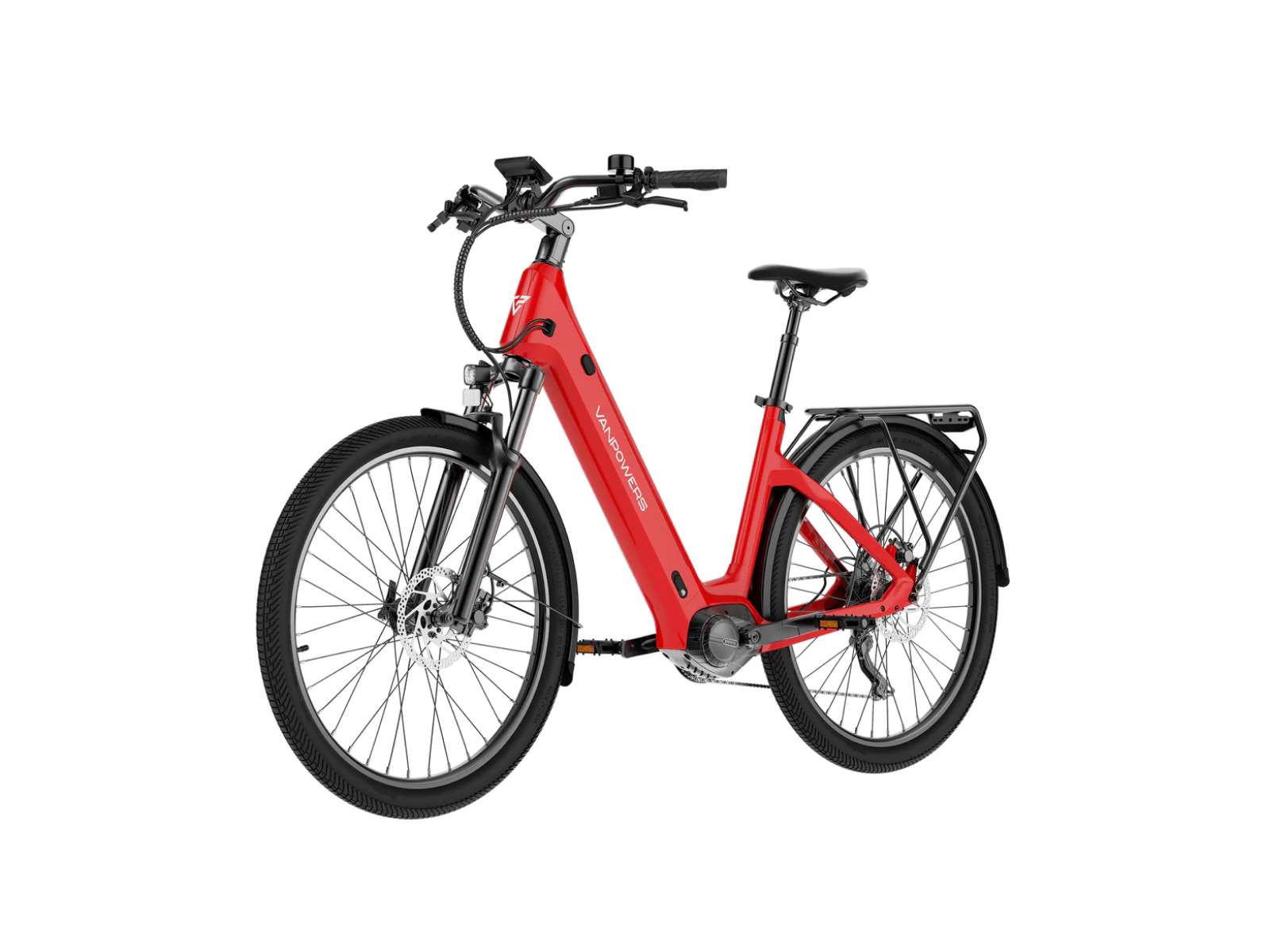
The wrong model can feel heavy, tall, or hard to control. This guide covers:
- The key features that matter most, from step-through frames to brakes
- Four types of senior-friendly e-bikes and what to look for in each
- Safety tips for new and returning riders
- Health benefits you can expect from regular riding
Quick answer: The best electric bikes for seniors have a low step-through frame, a comfortable upright riding position, smooth pedal assist, reliable hydraulic disc brakes, and a battery range of at least 30 miles. Test-ride before you buy.
Why Electric Bikes Are Growing in Popularity Among Seniors
E-bikes give older adults a way to stay active without the strain of a traditional bike. The motor flattens hills, softens headwinds, and makes longer rides possible.
How E-Bikes Support Mobility, Independence, and Health
For many seniors, an e-bike fills the gap between walking and driving. Here is what riders often value most:
- Mobility: Travel farther than you could walk, without needing a car for short trips.
- Independence: Get to the store, the park, or a friend’s house on your own schedule.
- Health: Pedaling builds strength and endurance, and you control how hard you work.
- Confidence: Pedal assist means you won’t get stranded halfway up a hill.
Why Choosing the Right E-Bike Matters
Not every e-bike suits an older rider. A heavy frame, a high crossbar, or jumpy acceleration can raise the risk of a fall. Choosing a model built for comfort and stability protects your safety and makes you more likely to ride often.
Key Factors to Consider When Choosing an E-Bike for Seniors
Before you compare brands, know which features make the biggest difference. Use the sections below as a checklist when you shop.
Frame Design: Why Step-Through Frames Are Best for Seniors
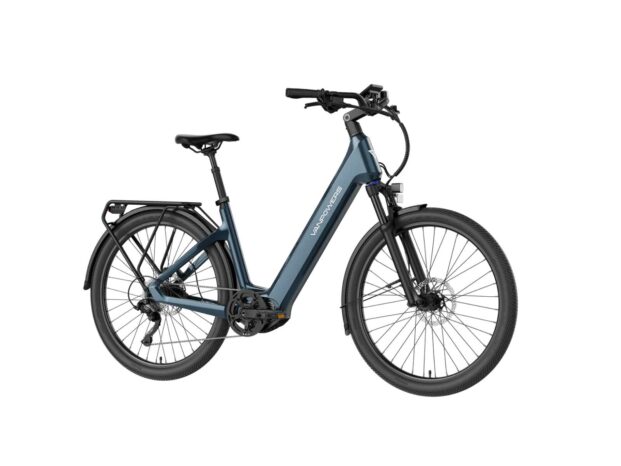
A step-through frame has a low or dipped center bar. You can walk into the bike instead of swinging a leg over the seat.
Why it matters:
- Easier to mount and dismount, especially with stiff hips or knees
- Lower chance of losing balance when stopping
- Easier to put both feet down at a red light
What to look for: A step-over height of about 15 inches or lower is ideal for most older riders.
Weight and Balance: Choosing a Stable E-Bike
Most e-bikes weigh between 45 and 75 pounds because of the motor and battery. A lighter bike is easier to move and store. A heavier bike can feel more planted on the road.
What to look for:
- A low, center-mounted battery for better balance
- A total weight you can handle if you need to walk or lift the bike
- Wider tires (2 inches or more) for added stability on uneven surfaces
Tip: If you need to load the bike onto a car rack, check whether the battery comes off. Removing it can cut 6 to 9 pounds.
Motor Power and Pedal Assist Levels
E-bike motors in the U.S. usually range from 250 to 750 watts. Most seniors don’t need the most powerful option. Smooth, predictable power matters more than raw speed.
Key terms explained:
- Pedal assist: The motor helps only when you pedal. Most bikes offer 3 to 5 levels.
- Throttle: Lets you move without pedaling, like a scooter. Helpful for starting from a stop or resting tired legs.
- Hub motor: Located in the wheel. Usually more affordable and simple.
- Mid-drive motor: Located near the pedals. Feels more natural and handles hills well, but often costs more.
- Torque sensor: Matches motor help to how hard you pedal. It feels smoother and more natural than a cadence sensor, which can surge forward suddenly.
What to look for: A torque sensor, multiple low assist levels, and an optional throttle for easy starts.
E-Bike Classes: Which One Should Seniors Choose?
Many U.S. states sort e-bikes into three classes:
| Class | How It Works | Top Assisted Speed | Best For |
|---|---|---|---|
| Class 1 | Pedal assist only | 20 mph | Bike paths, relaxed riding |
| Class 2 | Pedal assist + throttle | 20 mph | Riders who want easy starts |
| Class 3 | Pedal assist only (throttle rules vary by state) | 28 mph | Experienced commuters |
For most seniors, Class 1 or Class 2 is the safest and most practical choice.
Battery Range and Charging Convenience
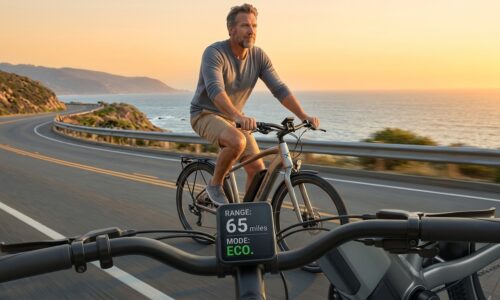
Battery size is measured in watt-hours (Wh). A bigger number usually means more range. Real-world range depends on your weight, terrain, weather, and assist level.
What to look for:
- Capacity: 400 to 700 Wh suits most riders
- Range: At least 30 miles per charge for flexibility
- Removable battery: Lets you charge indoors without moving the bike
- Charge time: 4 to 6 hours is typical
- Clear battery display: Easy-to-read bars or percentages prevent surprises
Comfort Features: Seat, Handlebars, and Suspension
Comfort keeps you riding. An uncomfortable bike often ends up in the garage.
What to look for:
- Wide, padded saddle: Supports your weight and reduces soreness
- Upright riding position: Swept-back or adjustable handlebars ease strain on your back, neck, and wrists
- Front suspension fork: Absorbs bumps and cracks in the road
- Suspension seat post: Adds extra cushioning on rough paths
- Ergonomic grips: Reduce hand fatigue and numbness
Braking Systems and Safety Features
Strong, dependable brakes are one of the most important features for any senior rider.
What to look for:
- Hydraulic disc brakes: Need less hand strength and stop reliably in wet weather
- Motor cut-off sensors: Turn off the motor as soon as you squeeze the brakes
- Integrated lights: Front and rear lights powered by the main battery
- Fenders and reflectors: Keep you clean and visible
- Kickstand: A sturdy one helps when getting on and off
Price Range and Value for Money
Quality e-bikes for seniors usually cost between $1,000 and $3,500, though premium models can run higher.
| Price Range | What You Typically Get |
|---|---|
| Under $1,200 | Hub motor, cadence sensor, mechanical brakes, basic components |
| $1,200–$2,500 | Better batteries, hydraulic brakes, more comfort features |
| $2,500 and up | Mid-drive motors, torque sensors, premium parts, longer warranties |
Value tip: Look beyond the price tag. A strong warranty, local service support, and certified battery safety (such as UL 2849) can save money and stress over time.
Top Electric Bike Models for Seniors
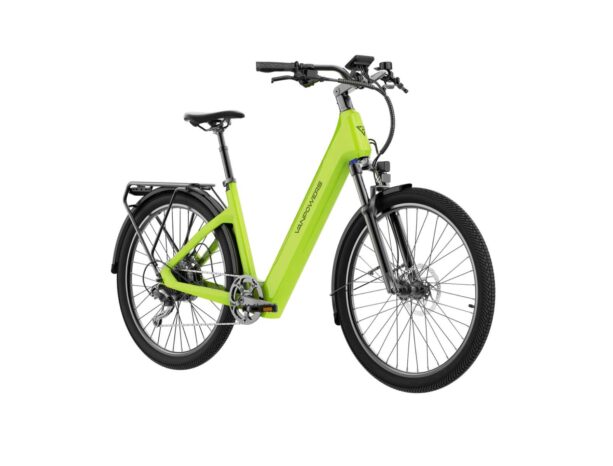
The best e-bike depends on your body, your goals, and where you plan to ride. Below are four common types of senior-friendly e-bikes. Use each section to evaluate specific brands and models you are considering.
Model 1: Urtopia Carbon Joy — Best Step-Through Comfort Cruiser
Who it’s for: Seniors who want relaxed rides around town, on bike paths, or through the neighborhood.
Key features to evaluate:
- Low step-through frame
- Upright seating with swept-back handlebars
- Wide, cushioned saddle
- Front suspension fork
Specifications to look for:
- Motor: 250–500W hub or mid-drive
- Battery: 500 Wh or more, removable
- Range: 35–50 miles
- Brakes: Hydraulic disc
- Weight: Under 60 pounds
Why it’s ideal for seniors: A comfort cruiser puts ease first. The relaxed position reduces strain, and the low frame makes every stop feel secure.
Model 2: Velotric T1 ST Plus — Best Lightweight E-Bike
Who it’s for: Seniors who need to lift the bike, carry it up steps, or load it onto a car rack.
Key features to evaluate:
- Lightweight aluminum or carbon frame
- Compact or integrated battery
- Simple controls
- Step-through or low step-over design
Specifications to look for:
- Motor: 250–350W
- Battery: 250–400 Wh
- Range: 20–40 miles
- Brakes: Hydraulic or quality mechanical disc
- Weight: Under 45 pounds
Why it’s ideal for seniors: A lighter bike is easier to handle when walking, parking, or storing. It also feels more like a traditional bicycle.
Model 3: Lectric XP Trike2 Long-Range Edition — Best Electric Trike
Who it’s for: Seniors with balance concerns, limited mobility, or less confidence on two wheels.
Key features to evaluate:
- Three-wheel design for added stability
- Very low step-through frame
- Large rear basket for groceries or supplies
- Parking brake to keep the trike from rolling
Specifications to look for:
- Motor: 350–750W
- Battery: 500 Wh or more
- Range: 30–45 miles
- Brakes: Disc brakes with parking lock
- Throttle: Recommended for easy starts
Why it’s ideal for seniors: You don’t need to balance at stops. An electric trike lets you sit, rest, and restart without putting a foot down.
Model 4: Ride1Up Portola — Best Budget-Friendly Folding E-Bike
Who it’s for: Seniors with limited storage, RV travelers, or anyone shopping on a tighter budget.
Key features to evaluate:
- Folding frame that collapses quickly
- Smaller 20-inch wheels with wide tires
- Adjustable seat and handlebar height
- Easy-to-use folding latches
Specifications to look for:
- Motor: 350–500W
- Battery: 400–500 Wh
- Range: 25–40 miles
- Brakes: Disc brakes
- Price: Under $1,500
Why it’s ideal for seniors: Folding e-bikes fit in a car trunk, closet, or RV. Small wheels also keep the bike low to the ground, which makes mounting easier.
Quick Comparison: Which Type of E-Bike Is Right for You?
| Type | Best For | Main Advantage | Main Trade-Off |
|---|---|---|---|
| Comfort cruiser | Everyday leisure rides | Maximum comfort | Heavier |
| Lightweight e-bike | Easy lifting and storage | Easy to handle | Shorter range |
| Electric trike | Balance concerns | Superior stability | Takes more space |
| Folding e-bike | Travel and small homes | Portable and affordable | Less smooth on rough roads |
Safety Tips for Senior E-Bike Riders
A safe start builds lasting confidence. These tips help you ride smarter from day one.
Wear a Helmet and Protective Gear
Always wear a properly fitted helmet. Look for one certified for bicycle use, and consider models made for e-bike speeds.
Also consider:
- Bright or reflective clothing
- Padded gloves for grip and comfort
- Closed-toe shoes with good tread
- Glasses or sunglasses to shield your eyes
Understand Motor Assist and Throttle Controls
Learn your controls before you ride on the road. Practice in an empty parking lot or a quiet street.
Get comfortable with:
- Turning the bike on and off
- Changing assist levels
- Using the throttle (if your bike has one)
- How quickly the motor cuts off when braking
Start With Lower Power Settings
Begin on the lowest assist level. It gives you time to learn how the bike responds. Move up one level at a time as your confidence grows.
Common mistake to avoid: Starting in the highest assist level. Sudden power can surprise new riders and lead to a loss of control.
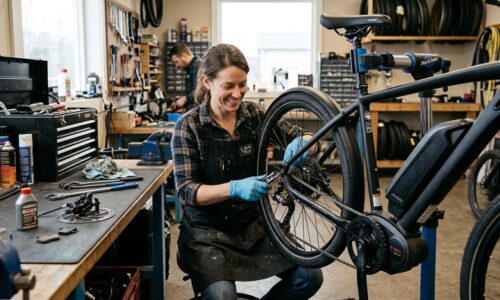
Keep Up With Maintenance and Safety Checks
A well-maintained bike is a safer bike. Before each ride, do a quick check:
- Tires: Proper air pressure and no visible damage
- Brakes: Firm response when squeezed
- Battery: Charged and locked in place
- Lights: Working front and rear
- Bolts: Nothing loose on the seat or handlebars
Schedule a professional tune-up at least once a year, or more often if you ride frequently.
Know Local Traffic Laws and E-Bike Regulations
E-bike rules vary by state and city. Some trails allow only Class 1 bikes. Some areas set age or helmet rules for certain classes.
Before you ride, check:
- Where e-bikes are allowed (roads, bike lanes, trails)
- Speed limits on shared paths
- Helmet requirements
- Lighting rules for riding at dusk or night
Health Benefits of E-Biking for Seniors
E-biking is real exercise. You still pedal, but you choose how much effort to put in. That flexibility helps many older adults stay active for years.
Cardiovascular Health and Increased Physical Activity
Regular riding gets your heart pumping and your lungs working. Health guidelines suggest older adults aim for about 150 minutes of moderate activity each week. Short e-bike rides several times a week can help you reach that goal.
Research on e-bike riders suggests that many ride more often and for longer than they did on traditional bikes. More time in the saddle means more total activity.
Low-Impact Exercise for Joints and Muscles
Cycling puts far less stress on your joints than running or jogging. Pedal assist lowers the strain even more, especially on hills.
Benefits include:
- Gentle movement for knees and hips
- Stronger leg and core muscles
- Better balance and coordination over time
Note: Talk with your doctor before starting any new exercise routine, especially if you have heart, joint, or balance concerns.
Mental Health and Social Connection
Time outdoors can lift your mood and ease stress. Riding also creates chances to connect with others.
- Join a local group ride or cycling club
- Ride with a spouse, friend, or grandchild
- Explore new parks and neighborhoods
Staying Independent and Mobile in Later Years
An e-bike can extend your range without a car. That freedom matters. Being able to get around on your own supports confidence, routine, and a stronger sense of independence.
Frequently Asked Questions About Electric Bikes for Seniors
What is the best type of electric bike for seniors?
For most seniors, a step-through comfort e-bike is the best choice. It’s easy to mount, comfortable to ride, and stable at stops. Seniors with balance concerns may prefer an electric trike.
Are electric bikes safe for older adults?
Yes, e-bikes can be safe for older adults when riders choose the right model, wear a helmet, start on low assist, and maintain their bike. Features like hydraulic disc brakes and step-through frames add extra safety.
How fast do e-bikes for seniors go?
Most Class 1 and Class 2 e-bikes provide motor assistance up to 20 mph. Many seniors ride comfortably between 10 and 15 mph.
How far can an electric bike go on one charge?
Most e-bikes travel between 20 and 60 miles on a single charge. Range depends on battery size, rider weight, terrain, and assist level.
Is a throttle or pedal assist better for seniors?
Both can work well. Pedal assist gives a more natural ride and more exercise. A throttle helps with starting from a stop or resting tired legs. Many seniors like having both options.
How much should a senior spend on an e-bike?
Plan to spend between $1,200 and $2,500 for a reliable, comfortable model with good brakes and a quality battery. Cheaper bikes may skimp on safety parts and battery quality.
Can seniors with arthritis ride electric bikes?
Many people with arthritis find e-bikes comfortable because cycling is low-impact and pedal assist reduces strain. Look for ergonomic grips, a padded seat, and an upright position. Check with your doctor first.
Key Takeaways
- Choose a step-through frame for easy, safe mounting and dismounting.
- Prioritize comfort: upright handlebars, a wide saddle, and suspension.
- Pick reliable brakes: hydraulic disc brakes offer the best stopping power.
- Aim for 30+ miles of range with a removable battery.
- Class 1 or Class 2 e-bikes suit most older riders.
- Start slow on low assist and build confidence over time.
Conclusion: Find the Right E-Bike and Enjoy the Ride
Electric bikes offer seniors a practical, enjoyable way to stay active and get around. With pedal assist on your side, hills feel smaller, rides last longer, and errands become easier.
The best electric bikes for seniors combine a low step-through frame, a comfortable upright position, smooth motor power, and dependable brakes. When those features come together, you get more than a bike. You get freedom, better health, and a reason to spend more time outside.
Your next step is simple: visit a local bike shop and test-ride a few models. Bring a family member if you like, and pay attention to how each bike feels when you get on, start, and stop. The right e-bike should feel safe and comfortable from the very first ride.
Explore our full range of electric bikes, trikes, and scooters at FutureEV Bike.
Need service or a tune-up? Visit our electric bike repair page for repairs on all e-bike brands, including mail-in options.